Six weeks in: what we’re learning at Ridgeline
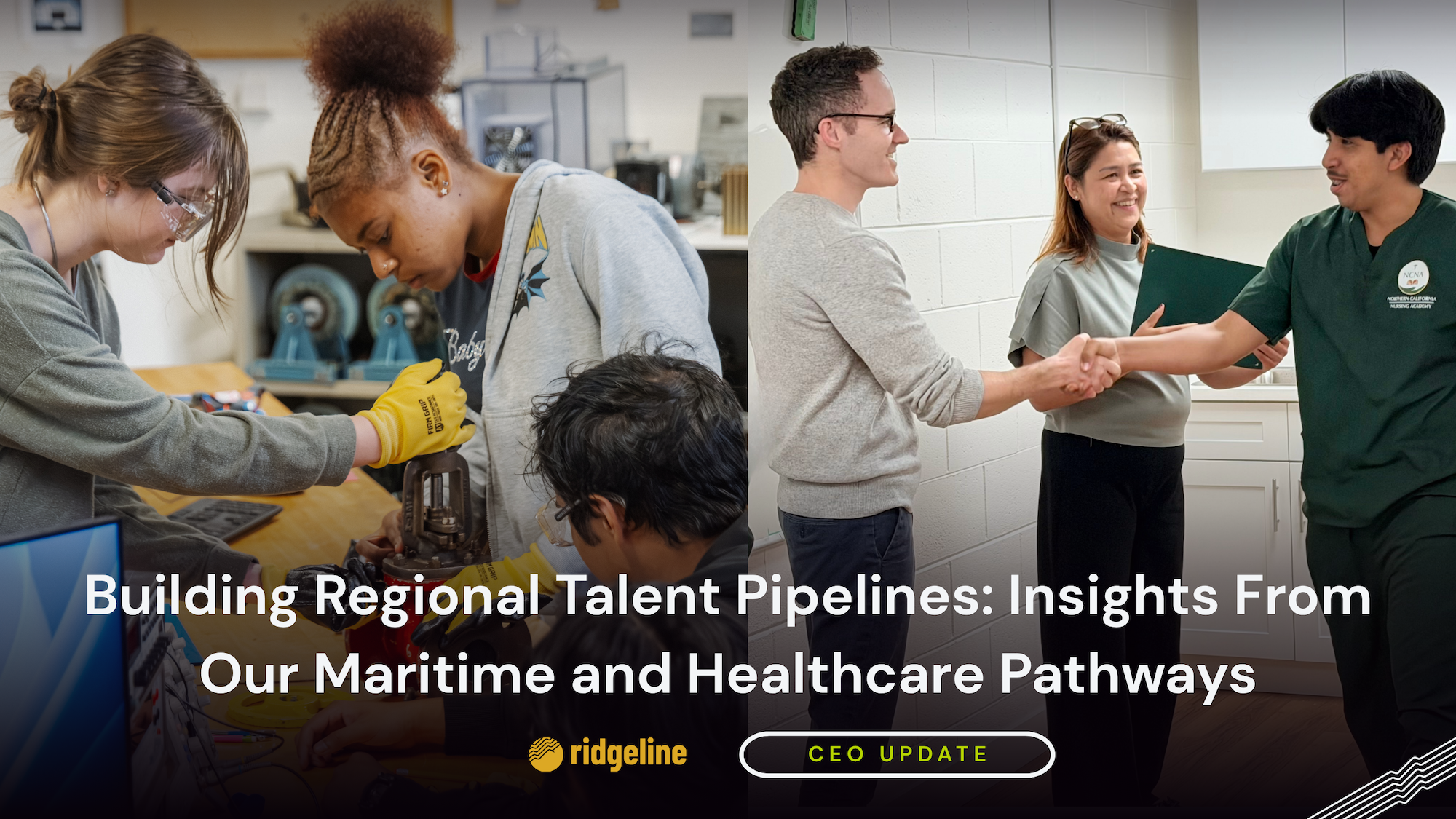
Building Regional Talent Pipelines: Insights From Our Maritime and Healthcare Pathways
We’re six weeks into Ridgeline, and we’re learning so much as we put our model – building regional talent pipelines to connect young people to high-wage careers – into practice.
One thing that has surprised me is how often career-connected learning stops at exposure and exploration, without connecting young people to work experience, durable skill development, industry credentials, and ultimately a path into a career.
Exposure and career exploration are fundamental early steps, but they should be the beginning of a student’s pathway.
That’s our bet behind Ridgeline’s grades 11–14 model. Young people can start with short, hands-on experiences to discover what’s possible, then move into deeper career exploration, paid work-based learning, rigorous professional skill development, industry credentials and dual enrollment, and more substantial work experience.
Together with our career navigation support, young people can move from exploration and experience into high-wage careers.
Ridgeline's healthcare pathway: from exploring healthcare to caring for patients
This summer, 25 rising 12th and 13th graders completed our first HealthWorks: Certified Nursing Assistant program.
Most had previously participated in HealthX, our five-month healthcare fellowship, where they explored patient care and other healthcare pathways, earned their Basic Life Support certification, practiced durable skills, and learned alongside healthcare professionals.
This summer, they moved into the next phase of our pathway.
- Students completed 60+ hours of classroom instruction and 100+ hours of clinical training.
- They worked with actual patients and had to make decisions in tough situations, communicate clearly with patients and supervisors, adapt under pressure, and work as a team.
- Our team provided career navigation throughout, helping students work through challenges on the job and reflect on what they were learning about themselves and healthcare.
We had 125 applications for 25 seats, and 100% of the students who enrolled completed the program.
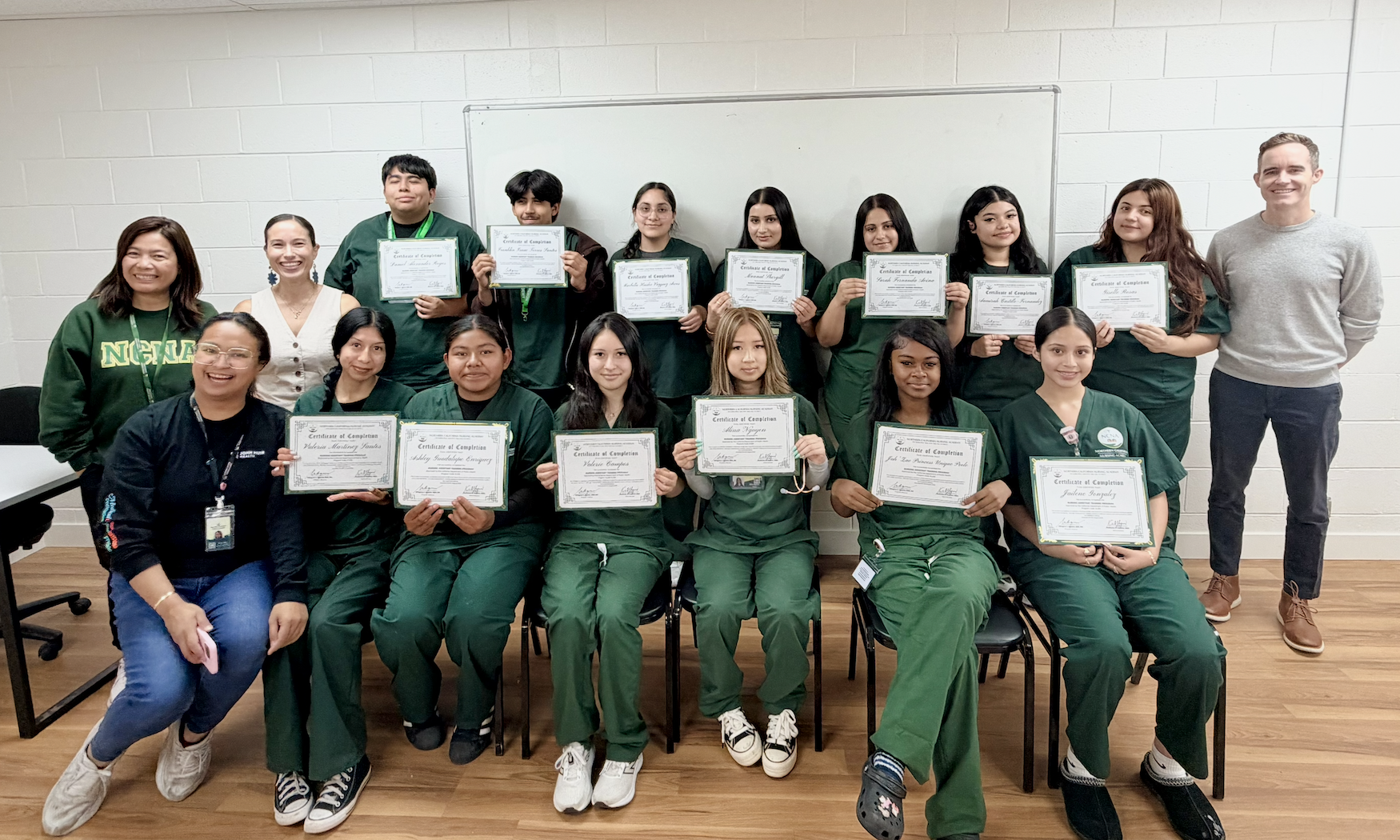
Now they’re preparing for the California state CNA exam, a credential that can lead directly to work and accelerate their path toward careers like Licensed Vocational Nurse, Registered Nurse, and more.
One student described what made the experience different:
“Being able to work with real people made learning a lot more realistic and challenging, but a good challenging.”
And 88% of participants said their next step is to look for a part-time CNA job while they continue their education.
Watching our students progress through each phase has been a total this is why we built Ridgeline moment. This is the progression we hoped to create when we started designing a grades 11–14 pathway.
And as AI reshapes work, experiences like these matter even more. Judgment, communication, adaptability, teamwork, and problem-solving are uniquely human skills. These are the skills employers are looking for now, and they’re going to matter even more as AI inevitably continues to disrupt and shape the labor market.
Special thanks to Northern California Nursing Academy, Golden Hearts School of Nursing, and Hidden Skills for partnering with us to make this opportunity happen.
Ridgeline's maritime pathway: starting with discovery for in-demand maritime careers
We also launched Hands-On Deck this summer, the first stage of our new maritime pathway, with 50 young people from 23 high schools across Contra Costa, Alameda, and San Francisco counties.
Seeing 50 students come together from 23 high schools made the case for why this work needs to happen regionally. A single high school may only have a handful of students interested in a field like maritime. By recruiting across schools and communities, we can bring together enough young people with a shared career interest to build a specialized, high-quality pathway and a talent pipeline large enough for employers to meaningfully engage and invest.
If we want young people to make informed decisions about their futures, we need to show them the full range of options, and not just the familiar ones.
Maritime is a great example. The Bay Area has high-wage careers that span four-year degrees and skilled trades, but most young people don’t know these careers exist or how to access them.
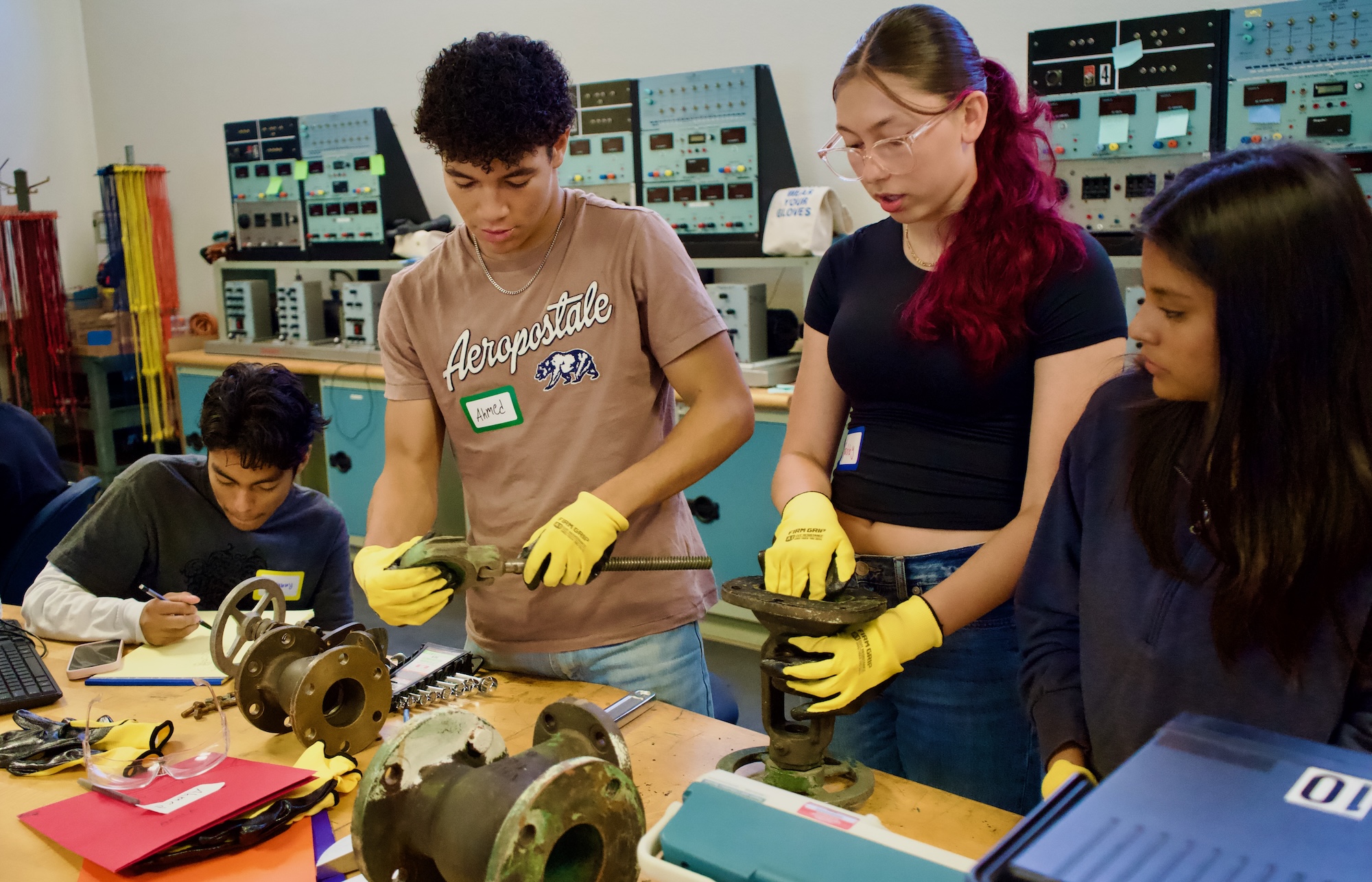
At Hands-On Deck, students crewed a live ship simulation and navigated a voyage out of the San Francisco Bay; they disassembled and rebuilt a valve; and they worked through real-world maritime challenges in experiences facilitated by people with deep industry experience.
- Nearly 90% left with stronger durable skills, new professional connections, and greater confidence making decisions about their futures.
- More than 60% described a wider sense of what was possible for them after the program.
Hands-On Deck is our starting point. This year, we’ll launch MaritimeX, a five-month paid fellowship that will give students deeper exploration and work-based learning across maritime careers.
From there, we’ll continue building the credentialing, work experience, and employment opportunities that make this a true grades 11–14 pathway.
Thank you to our incredible partners: Cal Poly Maritime Academy and the Working Waterfront Coalition for co-designing this program and to leaders from the Port of San Francisco, San Francisco Bar Pilots, San Francisco Bay Ferry, and Spaulding Marine Center for engaging with our students.
Ridgeline out in the world
A few fun Ridgeline sightings over the last month!
- I enjoyed speaking with Fortune about growing investment in American shipbuilding and why building a strong maritime workforce has to start in high school, long before someone submits a job application.
- Closer to home, KPIX/CBS Bay Area joined us at Hands-On Deck. You can hear directly from a few of our students about their excitement for maritime careers in this one-minute clip.
Coming up, we’ll be at two conferences in September. If you’ll be at either, let me know!
- At the QS Back to School Summit, I’ll join the Pathways Impact Fund, CredLens, and CAPS Network for a conversation about how changing learner expectations and employer demand are reshaping the path from education to work.
- And at CBExchange, my co-founder and Head of Program, Aiyana Mourtos, will join Jobs for the Future and the Working Waterfront Coalition to dig into the grades 11–14 “Big Blur” and what it could look like in practice.
One last thing: help us get to SXSW EDU!
We have two proposed conversations for SXSW EDU next spring, and voting is open through August 23. I’d love your vote for both!
- Better Questions: Designing a Future AI Can't Answer For Us will bring together Ridgeline, Britebound, the Pathways Impact Fund, and the Schultz Family Foundation to ask: As AI can do more and more, how do we help young people discover who they are, what they want from work, and what comes next?
- All Hands on Deck: Closing Maritime’s 250K Worker Gap will bring together Ridgeline, Cal Poly Maritime Academy, Fortune, and the Working Waterfront Coalition to explore how we build stronger pathways into maritime careers.
Six weeks in, we’re learning a ton, and I’m more excited than ever about what we’re building. We have a big opportunity in front of us to build stronger, regional pathways connecting young people in the Bay Area to high-wage careers.
Thanks for being part of it!
Ways to get involved
- Sign up for email updates from Ridgeline CEO and Co-Founder Pat O'Donnell
- Donate to Ridgeline and your gift will be matched 100% by a generous seed funder
From the trail



Join the Ascent
Join the Ridgeline email list for the latest news and opportunities.