Labor Markets Are Regional. Why Isn’t Career Preparation?

Last month, I wrote an op-ed for The Hechinger Report about how we've been treating college as a career plan, and why that approach is failing too many young people.
What would it take to change that?
What if every young person had opportunities to learn, work, and earn beginning in high school? What if they could explore different careers, gain meaningful work experience, earn credentials, and make decisions about post-grad college and career plans with a much clearer understanding of where they want to go?
In conversations with students, employers, and regional business leaders, two things are so clear to me – young people are hungry for hands-on experiences that help them figure out their futures, and employers are looking for new and better ways to develop the talent they need. Great. We have an opportunity to build something new, something that works for both of them.
But, there’s a challenge we need to solve.
Labor markets are regional. Career preparation is still school by school.
It’s interview season at Ridgeline. We’ve been interviewing 11th and 12th graders for our upcoming HealthX and MaritimeX Fellowships, and it’s been so fun and inspiring getting to know these students and hearing their stories. One has been building computers for family and friends, loves working with his hands, and now wants to explore maritime engineering. Another became interested in healthcare after helping care for her grandfather through cancer.
What I keep hearing, though, is how much they want opportunities to get out of the classroom, do hands-on work, and experience careers firsthand. For most, those opportunities are rare.
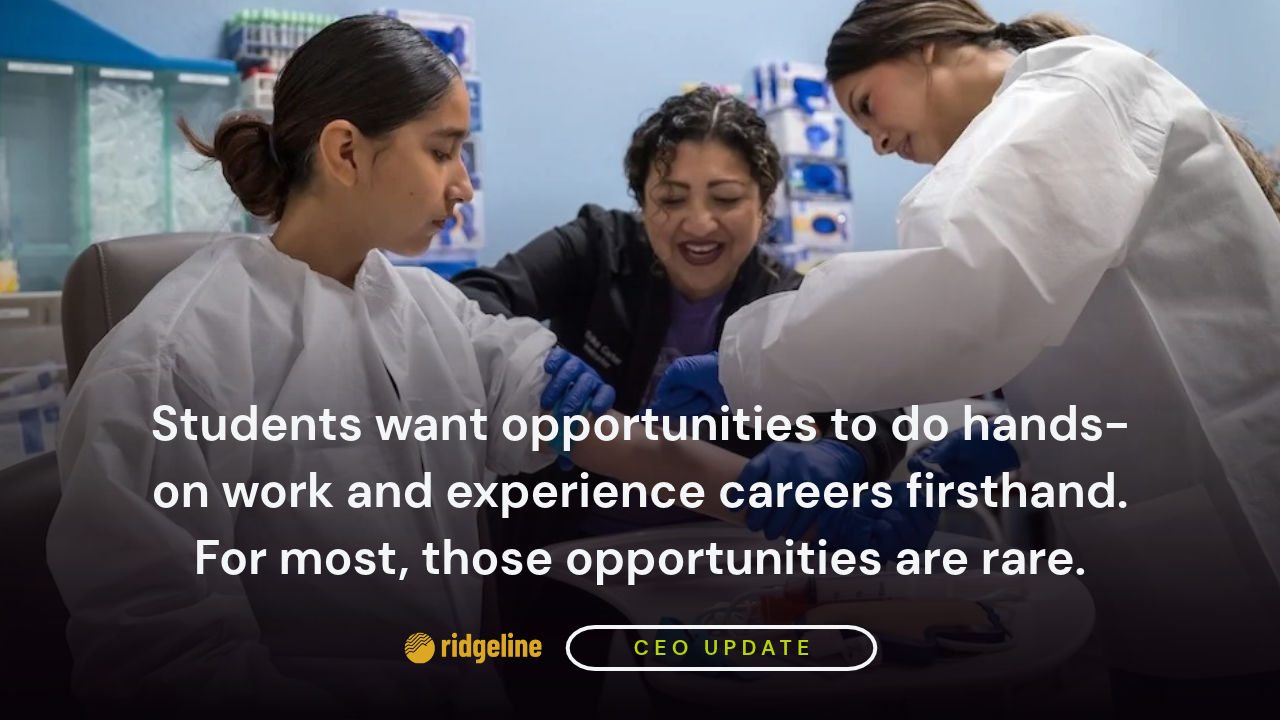
And access varies enormously depending on which high school they attend.
For example, some high schools offer healthcare Career Technical Education (CTE) pathways or career exploration experiences, while others don’t. Even when schools offer these programs, providing hands-on clinical experience is a major challenge. One of the biggest systemic barriers to building healthcare talent pipelines is access to hands-on clinical training. Hospitals can't accommodate large numbers of students, particularly minors, because of constraints related to space, staffing, patient safety, and liability.
This limits opportunities for young people to develop technical skills and constrains the scale of healthcare pathways.
The need for a regional approach is becoming increasingly clear to employers, too. Through my work on the Bay Area Council’s Workforce of the Future Committee, I've heard business leaders call for a more coordinated approach to developing talent, building pathways into priority occupations, and connecting employers with work-based learning and apprenticeship opportunities.
Employers know they can't solve their workforce challenges independently; they need a shared regional strategy.
Our conversations with students, schools, and employers have made the disconnect clear. We need to organize career preparation differently.
What if we started with the jobs in a region that offer strong wages and opportunities for advancement, worked backward to identify the education, credentials, and experience they require, and then built pathways that students could access across schools?
That's the approach we're putting into practice at Ridgeline. We’re:
- working with employers to understand specific occupations and the skills they require,
- bringing colleges and training providers to the table to design programs and credentials,
- developing new ways to expand access to hands-on training, including simulation-based learning and shared clinical experiences,
- recruiting students across dozens of high schools, and
- coordinating everything from paid work experiences to transportation.
It's complicated work that requires dedicated capacity, but it's what makes opportunities possible that no individual school or employer could build alone.
And we're seeing early results.
This summer, we partnered with the Northern California Nursing Academy and Golden Hearts School of Nursing to offer Certified Nursing Assistant (CNA) training to 25 high school students and recent graduates, many of whom had previously completed our HealthX Fellowship.
- 100% completed more than 160 hours of technical training and clinical rotations.
- Now, as high school seniors and recent graduates, they're considering a range of new opportunities and next steps, including working as CNAs while pursuing college or more advanced nursing credentials.
Their paths won't all look the same, and I think that's exactly how it should be.
We need many paths to strong careers.
- Imagine a student exploring healthcare in 11th grade, earning a CNA credential the following summer, and working full-time as a CNA for a year after graduation to gain experience and save money before entering a future Ridgeline Licensed Vocational Nurse (LVN) pathway.
- Another might earn that same CNA credential, work part-time while completing an associate’s degree that prepares them to enter a radiologic technology program, and eventually become a radiologic technologist.
- A third might use their CNA training to discover a passion for patient care, then head straight to a four-year university to pursue a bachelor's degree in nursing, bringing clinical experience and a clearer sense of purpose into college.
There isn't one right path to a strong career. Our job is to build more paths across the Bay Area and make sure every young person has access, regardless of which high school they attend.

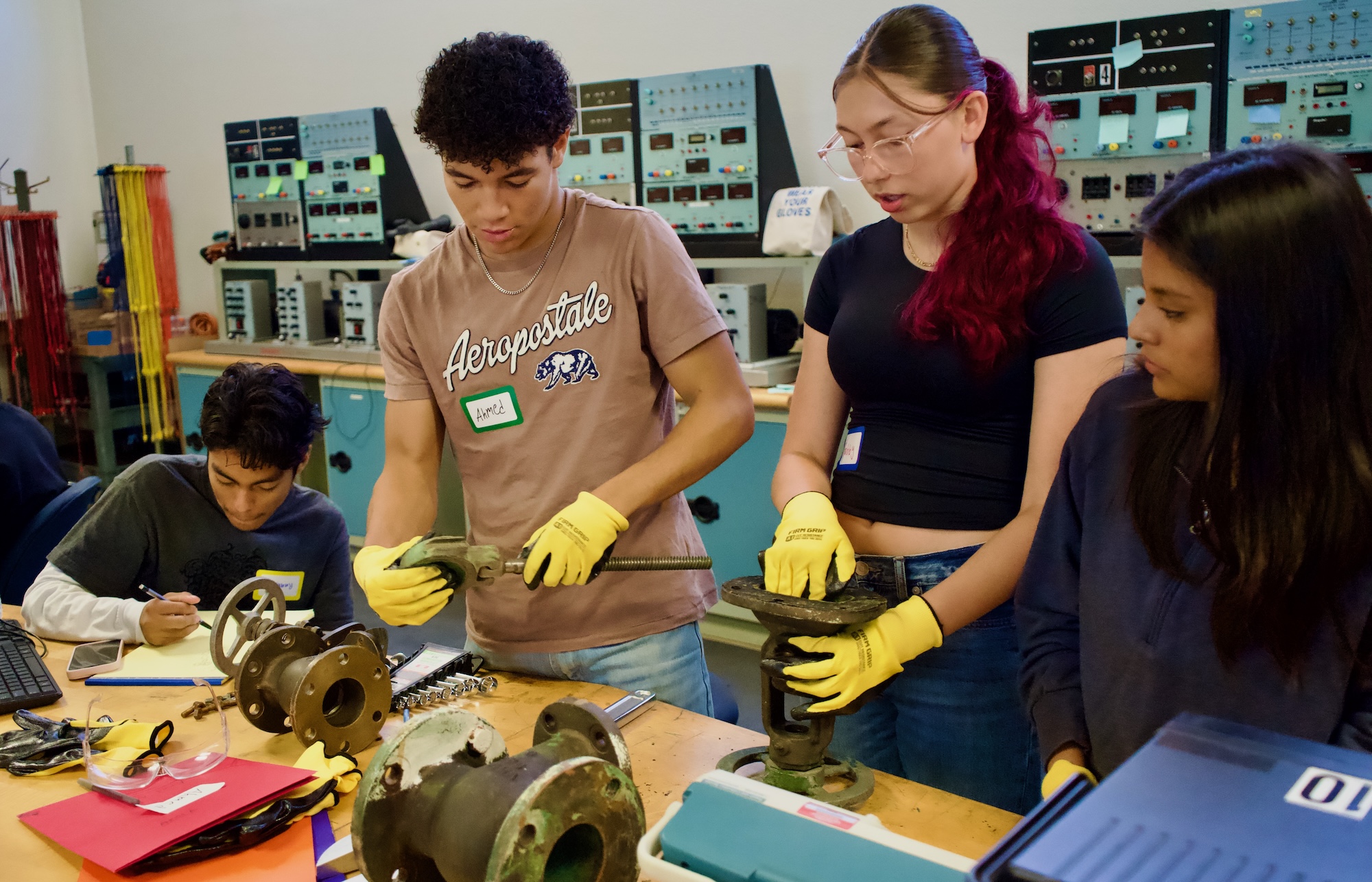
In December, we'll welcome new cohorts of students into HealthX and MaritimeX, our five-month, paid fellowships where young people will explore careers in healthcare and maritime, learn alongside industry professionals, earn their first credentials, and begin building the skills and connections that help them launch strong careers.
I’m excited about our opportunity to create a new way of doing things. I hope you are too. Reach out, come join one of our upcoming HealthX or MaritimeX sessions, or share this email with a friend or colleague who you think would like to get involved.
Get involved
From the trail


Join the Ascent
Join the Ridgeline email list for the latest news and opportunities.