With Ridgeline, Students Don’t Have to Choose Between Earning a Paycheck and Building a Career


An inside look with Aiyana Mourtos into Ridgeline’s paid, stackable model for youth and young adults ages 16 to 24.
Aiyana Mourtos has worked at every level of the system she’s now trying to change. Most recently, as Chief Program Officer at Making Waves Education Foundation, she led a college and career success program where underrepresented students consistently beat the odds, achieving a 70% graduation rate and 85% debt-free completion. Before that, she served as Chief of Staff to the Chancellor at DC Public Schools, where she redesigned graduation and post-secondary planning systems and led the district’s COVID-19 response – reopening all 117 schools first in the region. Earlier in her career, she held roles in Oakland Unified School District and began as an elementary teacher in Newark Public Schools.
At Ridgeline – a new career pathways nonprofit in the San Francisco Bay Area – Aiyana is helping solve the underemployment crisis and the disconnect between education and industry. Six months into her new role, she’s sharing what’s working, what’s ahead, and the impact so far.
What’s your role at Ridgeline?
I am Co-Founder & Head of Program at Ridgeline, which means I design career pathways across education and employment systems. I co-founded Ridgeline on a simple belief: everyone deserves the opportunity to do work that matters to them and to build financial freedom doing it.

What is the type of career pathways work Ridgeline is leading in the Bay Area?
Ridgeline is a career pathways intermediary with an initial focus on healthcare and maritime. We do the work that schools and employers can’t do on their own. We turn disconnected programs and institutions into regional pathways from education to employment.
Ridgeline is unique in that we both build and run the career pathway programs across the Bay Area.
- We backward-map every program from employer demand: what roles employers are hiring for, and what skills and credentials get high schoolers and young people in the door.
- Then we design and run each stage so high school, training, and work feel like one path to a quality job, instead of three separate systems.
Since Ridgeline is blurring the lines between school and work, what age range of students do you reach and why?
I’ll start with sharing who we build and run the programs for. We focus on young people ages 16 to 24 from low-income backgrounds. This is because our model was inspired in part by Jobs for the Future's Big Blur report calling for an increased focus on grades 11-14, the critical transition years before and after high school graduation.
This is the window – before and after high school graduation – where we see students need Ridgeline career pathways most, because there's no clear map from high school to a high-wage job.
Our students come in with a range of academic profiles. We intentionally design for the average student, not the top of the class. If a pathway works for them, it works for many others, too.
What does Ridgeline’s model look like? How are programs structured?
We’ve intentionally designed Ridgeline’s career pathways to be modular and stackable, with multiple entry points and paths to high-paying, strong jobs and careers.
There are four phases: Discover, Explore, Build, and Launch. Each one is increasingly intensive and closer to a high-wage job than the last – from three-day exploration programs to five-month fellowships to summer credential programs to eventually apprenticeships, degrees, or strong careers.
All phases of Ridgeline programs come with a stipend and support for barriers to access, like transportation. The pathway model is modular and accessible across the region, by design.
- Students join around 10th and 11th grade in high school and can stay with us through their first two years after high school graduation.
- Students can enter and exit at different points based on readiness and interest.
- Every program runs outside the school day and is paid, so students don't have to choose between earning a paycheck and building a career.
What are key components of Ridgeline’s pathways?
In addition to being modular and accessible, all our pathways are mapped to high-wage, in-demand careers, including:
- In healthcare: patient care, medical imaging, and emergency services.
- In maritime: navigation, engineering, the trades, and logistics.
Our Ridgeline programs also include the critical pieces needed to reach these jobs:
- Experience: Work-based learning and paid work experience alongside industry professionals.
- Skills: Durable and professional skills that transcend industries like communication, critical thinking, and collaboration.
- Networks: Social capital and connections with employers, mentors, and a cohort of peers.
- Credentials employers value.
- Career navigation and support with job applications, interviews, and progression from high school to a high-wage career.
Are there examples that illustrate the career pathways in action?
Yes, we have incredible students in Ridgeline programs, and we’re just getting started. I’ll start by walking you through the progression of our maritime pathway.
Discovery: 50 high schoolers joined Hands-On Deck, our discovery-stage program this past summer. Like many students in the Bay Area, most students joining had no prior exposure to maritime. During Hands-On Deck, they tried on three career paths alongside industry experts at our partner, Cal Poly Maritime Academy.
- Navigate it: they took the helm in a bridge simulator, charting a course, and steering a ship.
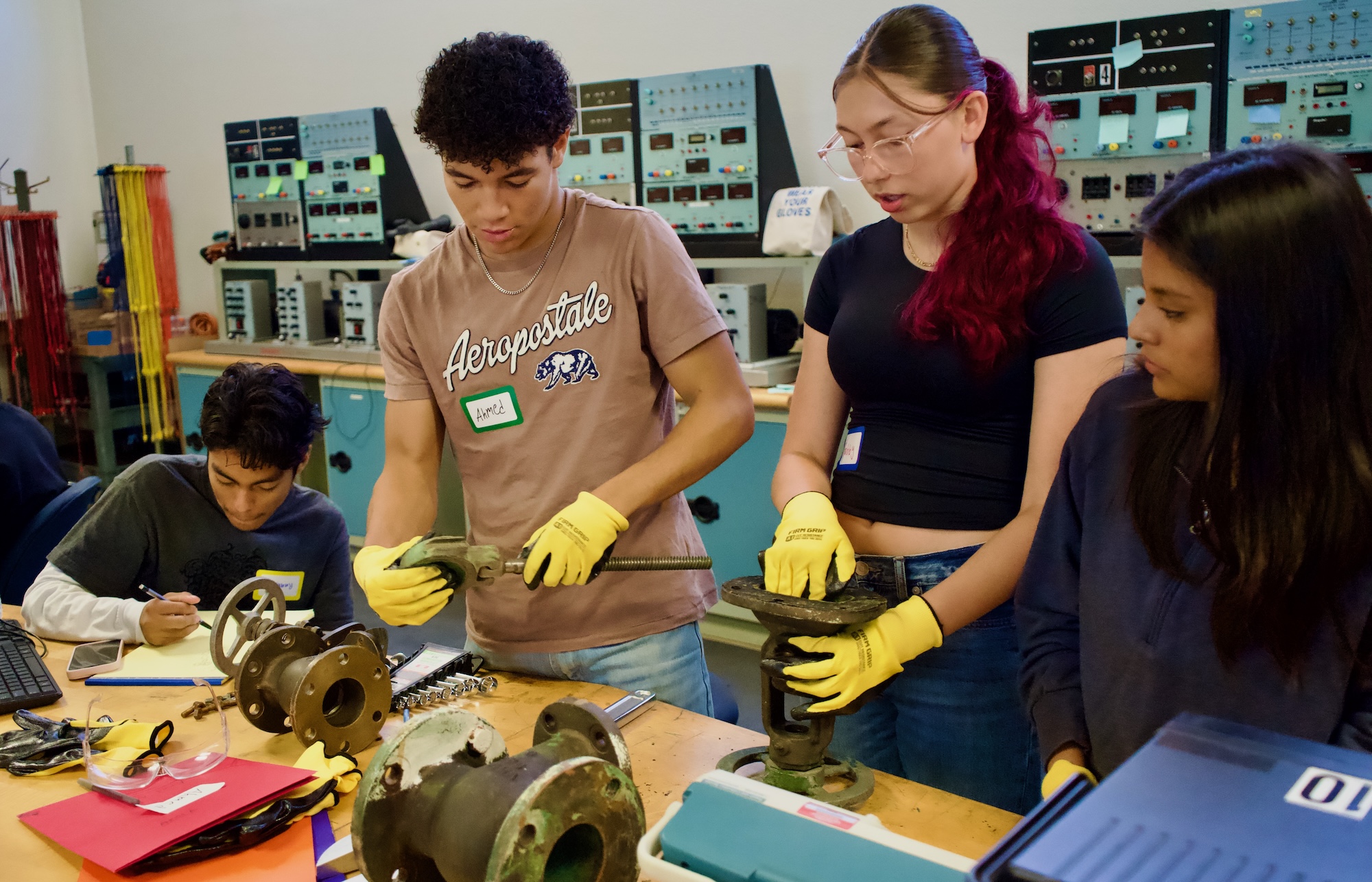
- Build & Fix It: they worked on model boat design and assembled and troubleshot a ship valve. This wasn’t a little faucet valve; it was the size of a large backpack!
- Move the World: they worked on port operations and logistics simulations, routing food and vaccines around the world while handling disruptions along the way.
Experiences shaped by employers: None of these activities were invented in a vacuum. Each one was shaped by what we heard from Bay Area maritime companies and employers about the skills they need, and co-designed with our partners at Cal Poly Maritime Academy and the Working Waterfront Coalition.
This discovery phase is a port of entry into the maritime industry. Students walked in not knowing about this industry and walked out with more confidence, more options, and excited to continue building on these experiences and skills in Ridgeline’s next stages and ultimately to carry into their future careers.
What's next: Many of these students are joining the next phase of Ridgeline’s maritime career pathway: our MaritimeX Fellowship. It's a five-month, paid experience, similar to an internship program, built in two equal halves.
- 30+ hours of durable skills in an industry context: we make skills, like communication and problem-solving, concrete, with observable, teachable behaviors and industry-based simulations, not abstract frameworks.
- 30+ hours of work-based learning: co-designed with Cal Poly Maritime Academy and the Working Waterfront Coalition, so he can explore both the trades route and the engineering route to a high-wage job
Where the pathway leads: MaritimeX leads to the Build and Launch phases, where Ridgeline continues to partner with education and employment partners and provide career navigation support.
- Our Ridgeline Fellows could go straight into Working Waterfront Coalition’'s pre-apprenticeship program and then an apprenticeship, toward jobs like welder or deckhand.
- They could enroll at Cal Poly Maritime Academy to get a bachelor’s degree toward roles like marine engineer or captain.
- Or they can do one and then the other. The pathway supports their choices instead of locking them in, which is how the real-world works.
We’re in the early stages of our maritime pathway, whereas our healthcare pathway is further along so we know this progression works – for both young people and employers.
The healthcare pathway progression: In healthcare this year, high schoolers moved from our three-day Hands-On Health program to our five-month HealthX Fellowship to our summer HealthWorks: CNA program, which had a 100% completion rate.
Often in our healthcare career pathway, high schoolers come in with strong, general interest in healthcare – usually because of well-known careers like doctors and nurses – but they have no real sense of the day-to-day work and the other options that are out there.
Exploring the range of healthcare careers: During our five-month HealthX Fellowship, students earned their Basic Life Support (BLS) certification and got hands-on exposure to roles they might not have yet considered — like radiologic technology and nuclear medicine. But just as important, they build confidence and durable skills, especially communication, active listening, and empathy.
Gaining clinical experience: That preparation showed up almost immediately in HealthWorks: CNA, a Certified Nursing Assistant training program, which several HealthX Fellows completed this past summer over eight weeks. HealthX built a foundation for them to walk in comfortable engaging with instructors and asking questions. They also already knew the physical and emotional demands of the field.
HealthLaunch coming soon: Hands-On Health, HealthX, and HealthWorks will then lead into our HealthLaunch phases, where Ridgeline continues to partner with education and employment partners to offer advanced credentials and work experience so high schoolers and graduates can launch into employment or high-ROI degree pathways.
The model leans on modularity and student agency rather than a fixed pipeline. Why is that?
Let’s start with agency. We want young people choosing their path based on real experience, not guesses. That's hard to do in a fixed pipeline.
A traditional pipeline assumes a student knows early on what they want to do, or that their high school happens to offer it. Maritime is a good example. Often maritime is not on a student’s career map, and almost no high school offers a maritime career pathway, yet in the Bay Area, it offers incredible opportunities.
Because we build across schools, any student in the region can find their way to careers like these. Employers get a regional pool of talent instead of one school's worth.
Going back to the intentional modular design, this is what makes student agency real. Every stage is designed to lead to the next, but also to stand on its own with a meaningful outcome: a paycheck, skills, a network, and often a credential.
- Sometimes a student's answer is "this is for me," like Hands-On Deck students then choosing MaritimeX as the next step.
- Sometimes it's "this isn't for me," and that's a good outcome, too. It's far better to learn that at 17 in a fellowship you’re getting paid to complete than at 20 in an expensive degree or training program.
We don’t consider a student choosing another path a leak in the pipeline; we consider it a young person making an informed choice.
Why are social capital and durable skills so important to the career pathway model?
Social capital and durable skills are what students carry forward.
Whatever route a student takes, two things go with them: the people who know them, and the skills that keep them in the door.
90% of Ridgeline students come from low-income backgrounds. Because of inequities and systemic barriers, they are the least likely to have the professional relationships that open doors. As AI makes applications and resumes easier to produce, human connections matter more, not less: who knows you, who’s seen your work, who’s willing to vouch for you. We build that professional network deliberately, through direct contact with employers and training partners, mentors, and a cohort of peers who share the interest.
Just as critical are durable and professional skills. A credential gets you in the door, while communication, reliability, and knowing how to handle a hard moment are what keep you there. Sarita Avina is one of our students who moved from the HealthX Fellowship last school year into the HealthWorks program to become a Certified Nursing Assistant this past summer.

Sarita told us the skills she built with us are what let her walk into the CNA program comfortable working with adults, and confident asking questions, from day one. Then, during her clinical rotation, she hit a tough moment. Something happened on shift that was completely routine to the staff, but it was new to her, and she genuinely thought she might lose her spot. Our career navigation team helped her understand what was going on and how to handle it, and she came through stronger.
Sarita is a senior in high school and already shared this: “I’m becoming a resilient, caring, and patient professional. These are traits I already had before Ridgeline programs, but I didn’t realize how much I could improve them in such a short time.”
She’s one of 200+ young people from 40+ high schools who have completed our Ridgeline programs so far.
- 97% experience growth in durable skills.
- 94% experience an increase in motivation.
- 92% gain increased career clarity
- 90% increase their social capital.
Challenging moments in real-life workplace settings are where young adults might quietly drop out. What keeps them going is exactly this combination: durable skills, plus someone in their corner.
What helps the durable skills ‘stick’?
At Ridgeline, we teach durable and professional skills within an industry context. Communication looks different on a ship than at a hospital, so we make these skills concrete with observable, teachable behaviors practiced in industry settings. Whether in maritime they end up welding or at the helm or whether in healthcare they end up in a hospital or clinic, those skills and relationships go with them.
This is competency logic applied across settings. What matters is what a student can demonstrate, not which institution they were enrolled in when they learned it.
Our focus at Ridgeline is to make sure that learning counts, and that the skills travel with them from one stage, one system, and one route to the next.
It seems like there is a gap between career exposure and young people actually landing jobs. Is this type of rigorous career programming for teens and high schoolers common in the Bay Area and across the county?
Unfortunately, no. Most assume career exploration alone will get students into jobs – or don’t have the capacity to go beyond career exploration into rigorous experience, skills, credentials, and direct paths to careers.
Building on Angela Duckworth's research on grit, I think about a progression young people need to move through: This is interesting to me. This is important to me. I can do this. I know what to do next. Most career exploration does the first step well. A great guest speaker or a field trip can spark "this is interesting to me." But that's where most programs end.
The other steps take more. "This is important to me" comes from time in real workforce settings. "I can do this" comes from gaining real work experience. Again, Ridgeline students are just hearing about navigation; they are literally taking the helm.
"I know what to do next" is the step almost everyone skips, and it's the bridge from career exposure to employment.
The social impact world talks a lot about systems-level change. What does this mean at the systems-level?
Through a systems lens: the next step beyond career exposure has to actually exist. Demand from the job and labor market has to be real. A lot of programs are called "aligned with demand," but a few layers down they aren't.
Healthcare is a good example. It's a high-demand industry, but not every job in it is high demand. In our region, a lot of high school healthcare pathways are in sports medicine. There aren't as many sports medicine jobs as there are students in those programs, but due to experience requirements it's what schools can staff.
This is why Ridgeline is so committed to starting from the other end: from what jobs companies are actually hiring for. We build opportunities backward from there.
This also means we need to stay flexible. There's excitement in the Bay Area in terms of where maritime jobs are headed. There are opportunities across port electrification, ferry expansion, offshore wind – and a wave of upcoming retirements. But anticipated jobs aren't the same as actual openings. That's why our partners matter so much. With a regional network, we can all coordinate and adjust based on where the industry is going.
Even if there is employer demand, the pathway can still break if the next step beyond career exposure has a two-year waitlist or a price tag students can't cover. Many affordable training programs run on lotteries and long waitlists. For a student in the academic middle, that can mean years of lost momentum right when they're ready to go.
That's why at Ridgeline we treat affordability and time-to-career as design requirements. For every step we design, we ask: can a student actually afford this, and can they start when they're ready?
Getting young people to "I know what to do next" takes two things: a student who's ready, and a system with an accessible training path and a real job on the other side.
Is there proof learning-by-doing or on-the-job training is worth the investment?
Yes! There's a whole line of research on what's called career decision self-efficacy: a young person's confidence that they can figure out their path.
Students who lack this confidence tend to avoid the very steps that would help them decide a future path. And the most reliable way to build it isn't hearing about careers. It's doing the work.
The framework most researchers use, Social Cognitive Career Theory, puts it simply: what you experience shapes what you believe you can do, and what you believe shapes what you choose.
That's why a job shadow and a guest speaker only go so far. A guest speaker tells you a career exists. A job shadow shows you someone else doing it.
Real work experience is the only one of the three that lets a young person find out whether they can do it and whether they can see themselves in it.
When students took the helm in that bridge simulator or worked on a valve the size of a backpack, they weren’t hearing about maritime. They were trying on maritime careers for themselves, and that changed what they believed was possible.
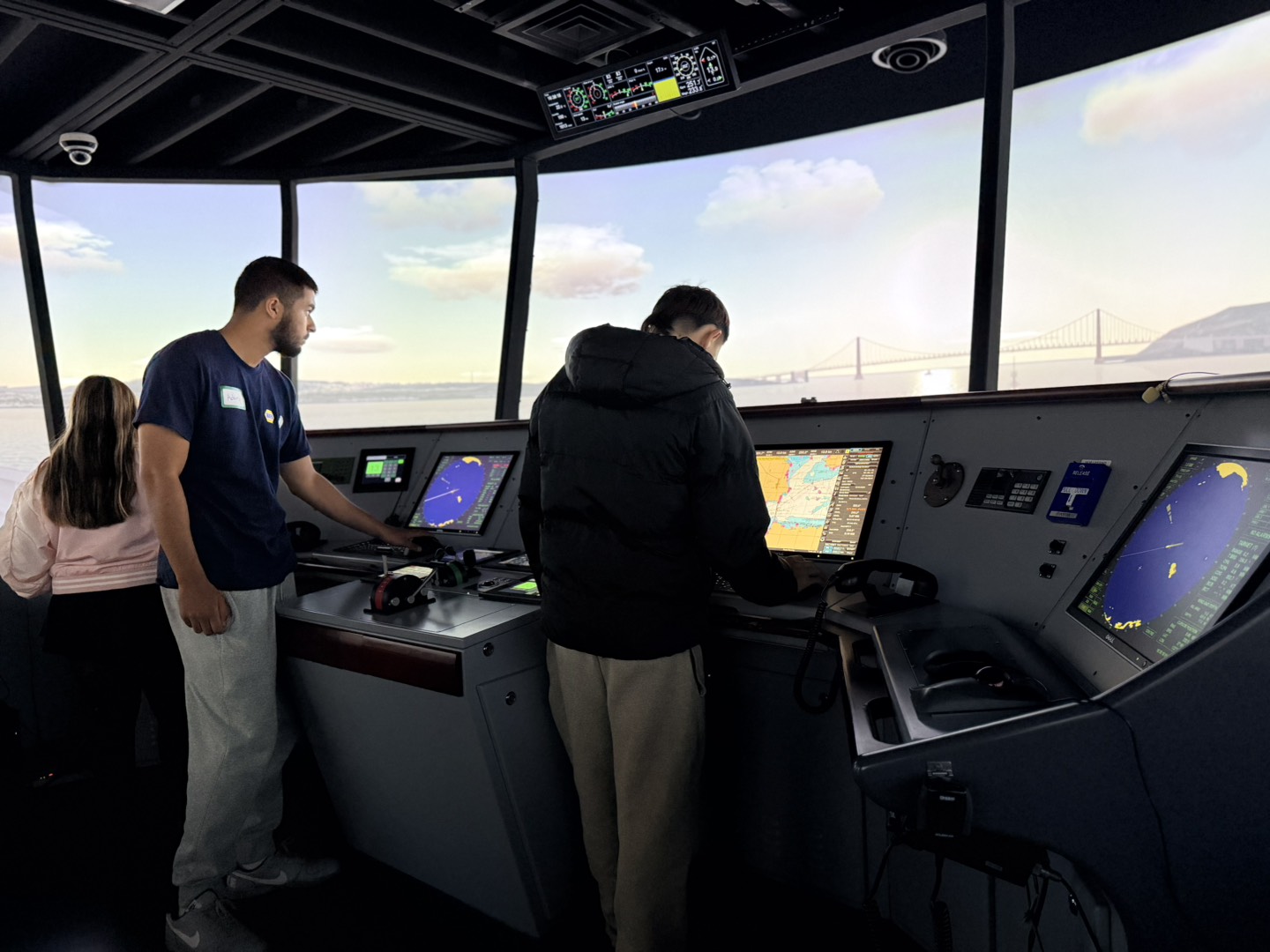
There are benefits for students and employers, too. In our Ridgeline programs, students are building relationships with industry professionals. Those connections matter, and they’re the kind most young people don’t have access to at 16 or 17. Students also get an honest look at the hours, the demands, and the culture of the work. And employers get an early window into the next generation of talent.
I’m a huge advocate of: if we want young people to choose strong careers, we have to give them experiences that change what they believe they can do. We need to stop asking young people to wait until they're old enough, qualified enough, or lucky enough to "get" experience.
Young people are far more capable than we give them credit for, and they're wired to contribute. When we give them meaningful, real, work, they rise to it.
Any final thoughts?
Every young person should be able to learn, work, and earn on the way to a strong career, no matter which school they attend. Our job is to make the systems work together to make this happen.
From the trail


Join the Ascent
Join the Ridgeline email list for the latest news and opportunities.